Substack Series: Kenosis and the Vulnerable Word
Kenosis and the Vulnerable Word: Part One

Inspired by Michel Foucault’s “Discourse and Truth: the Problematization of Parrhesia” introduced to me by author E. Lily Yu’s Substack essay a while back, and drawn through the aesthetic lens of kenosis, emptiness, and the fragile architectures of truth-telling. The first of this series is free to anyone who subscribe, and the rest will be for paid members only.
Entry One: The Clearing (Kenosis as Silence)
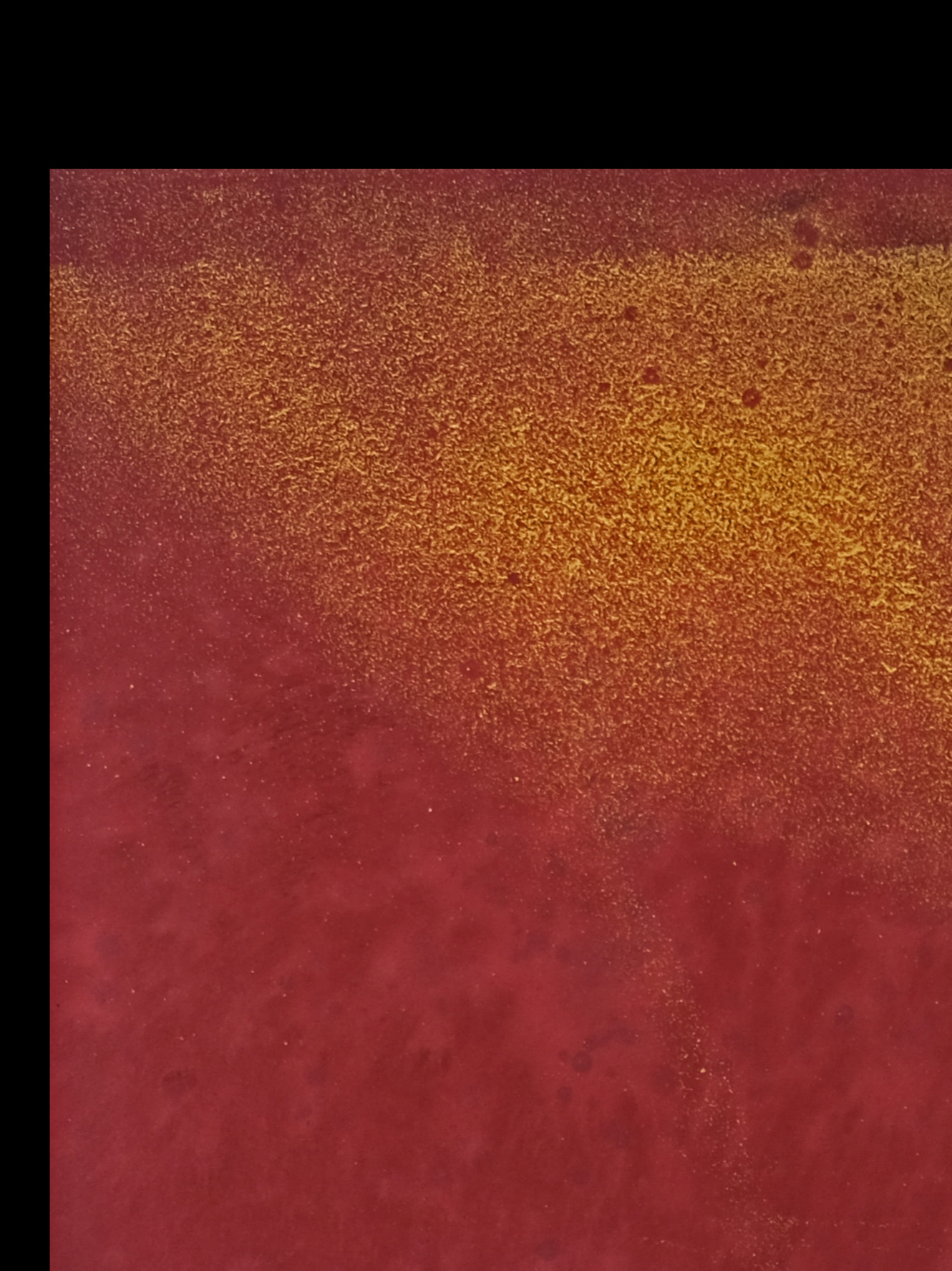
We begin not with speech, but with silence and hesitation before speech.
(Image: “Kenosis - Flow” (section) 64x80”, gold, minerals and colored gesso on canvas ©️2025MakotoFujimura)
Foucault, in his Berkeley lectures, unearths parrhesia—the act of frank truth-telling—as a form of dangerous courage, a nakedness of the soul before the tribunal of the other. But what precedes this frankness is not conviction. It is our fear.
And what if kenosis—the self-emptying of Christ, the voluntary outpouring of the Divine into frailty—is the architecture undergirding every authentic instance of parrhesia?
The parrhesiast stands in the public square.
But he stands silent.
He diminishes before a word is spoken.
Not out of self-loathing, but out of love. Art is love.
The ground of parrhesia, Foucault suggests, is ethical rather than epistemic. It is not about what you say, but the risk you take in saying it. To speak freely is not the same as speaking truthfully. But to speak truthfully, one must pass through kenosis—must let go of power, safety, and sometimes belonging … and silence.
I considered this silence in my book “Silence and Beauty” (IVPress) a while back, in a reflection on Shusaku Endo’s “Silence” and Martin Scorsese’s film of the same title. This silence is pregnant, as it will be misunderstood, and even rejected form of powerlessness, but that is why this silence is necessary as a form of clearing.
The clearing prepares the way for a voice that has first been emptied. Art is, in this sense, kenotic silence. Such enduring art is continuously generative, as the portal to “empty itself” into every age and all cultures, speaking into the viewers or readers’s hearts with new meaning. I reckon that there is the holy silence before the work is made; and that gives unction to the action of paint, of words, of a performance. Art that benefitted from successful transaction tend not to be kenotic, not just because the very fact that it received a compensation for the act, and by that necessity the work will remain localized to that transactional geography. Transactional success can be gained without this silence. Thus, if you contrast Van Gogh’s “Starry Night” verses, let’s say, Thomas Kinkade’s work, the latter may have been sold in higher price than the former, but the latter does not have (at least thus far) the ability to live beyond the mall-scape of America. “Starry Night" - painted in an asylum, in silence - had a different ontology than most paintings sold and marketed, and is a vastly different offering as a gift.
This necessary silence often is accompanied by suffering, and comes with a greater risk.
I will expound of this risk in my next essay on this series. Come journey into the light with me.